

Where the Crawdads Sing
Updated: Aug 8
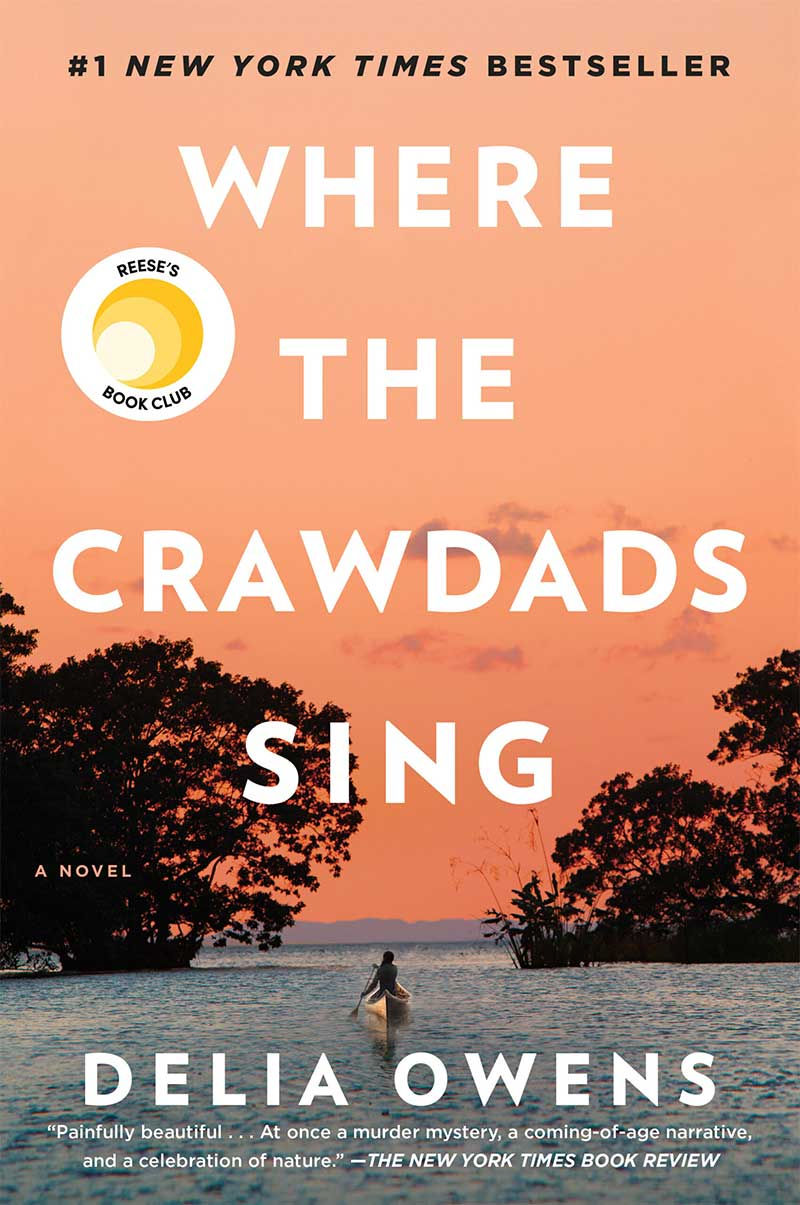
My reading history suggests that if my tastes don’t always trend far from the mainstream (they largely do), it does suggest that, if I find my way to widely read books (and I often don’t, frankly, perhaps to my own detriment, out of pure contrariness), I tend to find my way to them long after they’ve exited public consciousness. I’m largely the same way with movies and television shows: I’ve seen two movies in the theater since 2017 (curiously, both in late 2025), and I don’t watch TV shows until their runs have concluded. Over the years, that’s made chatter around the water cooler a challenge from time to time, but with the fractured streaming landscape we now live in, few people likely subscribe to the same services to watch, let alone talk about, the same shows.
That brings me to Where the Crawdads Sing, published way back in 2018—before Covid!—when we were living in another house in another city, and working different jobs (well, I was kinda, sorta working the job I have now). I’d heard nothing but good things about it, and even though more than twenty percent of my Goodreads friends have read it (all five- or four-star ratings), none recommended it. So I never bothered. But lately, we’ve been taking friends visiting from out-of-town to one of our favorite local antique shops. One of the booths sells nothing but books, paperback and hardcover, mostly but not entirely contemporary, across all genres, and at prices that, frankly, boggle the mind. On our last two trips, we’ve purchased more than 20 books. These are books that have been on the radar and could certainly be gotten from the library for free, but let’s be honest, probably never would have because, well, it’s too easy to swell one’s want-to-read list. Finding them this way feels like fate stepping in and nudging some of the books in that very long list (525 and growing) to the top. If my feelings about Delia Owens’s debut novel are any indication, I will be much richer for it, even if my pocketbook says otherwise. All that to say, by now, it seems everyone who was going to read this book has already done so (though I do have one Goodreads friend who still has it marked to read), so there’s little I can write that’s going to add to the conversation. But I will anyway.
In a way, Where the Crawdads Sing has everything and the kitchen sink going on. It’s a coming-of-age story with abuse, loss, trauma, heartache, heartbreak, longing, violence, tragedy, murder, prejudice, small-town small-mindedness, and love—let’s not forget love—intertwined with a reverence and an awe for the natural world. By training, Delia Owens is a wildlife scientist, and it is that background that adds the necessary depth and complexity and coloring—at least for this reader, who shares that same reverence and awe for the natural world—to what could have otherwise been a solid but somewhat pedestrian murder mystery. Could have been, but most decidedly is not, as Owens has another trick up her sleeve: a delicious structure propelling two different narratives on two different timelines on what appear to be parallel, non-intersecting tracks until, at last, they collide in ways both expected and unexpected. And, frankly, hoped for.
I read all but the last 30 pages in two days, and then let the book sit, unread, for the next two. I was desperate and terrified to know what would happen. Was this the crowd-pleaser I knew it must be, and so must end a certain way? Or was it the exceptional mold-breaker that people fell for even as it broke their hearts? Could it be both? Yes, and yes. And yes. There was, of course, a slight twinge when what must surely come came along, but, given what our protagonist had long suffered and endured, Owens can hardly be blamed for wanting every amend amended. I don’t read much fiction these days—only 10 of the past 91 books have been fiction—but if Where the Crawdads Sing is any indication of what I’m missing, and I believe it very well might be, perhaps this is the year for me to begin to balance the scales.


Comments