

The Works: Anatomy of a City
Updated: Aug 8
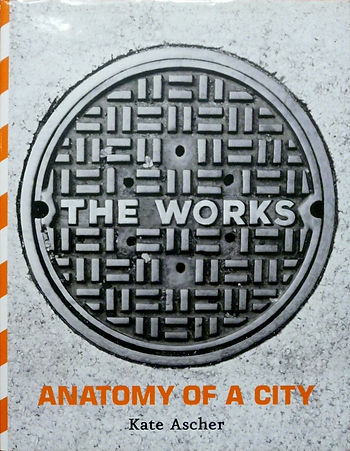
I really wanted to love Kate Ascher’s The Works: Anatomy of a City. I was looking forward to turning the pages with fascinated glee like I did as a kid with the anatomy and physiology textbooks and their transparent overlays of all the body’s systems. I had also hoped it would be something of a companion piece to Alan Weisman’s excellent The World Without Us— the former illustrating how we keep a city alive, the latter examining what happens when we’re not around to do so.
Though meticulously researched, wonderfully designed, and filled with hundreds of detailed illustrations, The Works, largely failed on all fronts. While abound in breadth, it is uniformly lacking in depth. While loaded with detail, there is no analysis of any of it. While its five sections—moving people, moving freight, power, communications, and sanitation—are perfectly delineated, each is discussed in a vacuum, and a look at how these systems work together would have been welcome.
Finally, while the book was specific to New York City, it wasn’t difficult to extrapolate its anatomy to other places I’ve lived, but its final section, the future, was a complete let-down. Here’s where all the threads could have been tied together, the litany of facts and figures given some context and put towards a discussion about what is through the lens of what could be. Instead, Ascher offers a NYC-only list of near- and medium-term infrastructure plans that can only be characterized as mundane, even to residents of the five boroughs. A fitting end, then, to a book I can best characterize as part DMV manual, part city council presentation, and part urban studies primer.


Comments