

The House of Belonging
Updated: Aug 8
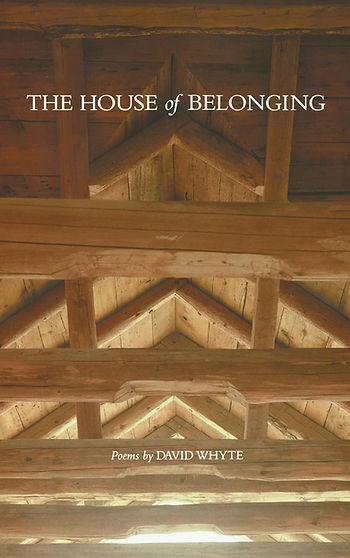
Sometimes something comes to you at precisely the moment you needed it most. I received this as a gift for my 49th birthday, nearly a year ago, but only picked it up to read over the past month. Anytime between then and now would have been the right time, but that I waited until we were moved into what was to be our forever home, the home we waited some two-and-a-half years to move into, was either cosmic alignment or happy accident. I did not consciously choose to wait to read this book until our arrival at Kingfisher Cottage, but perhaps it did. As it happens, this may not remain our forever home, as a possibility has presented itself (one for which I have many ardent adjectives but will withhold for the sake of prudence), and so we are, right now, as unsettled as we’ve yet been, perhaps more, since our move to Manhattan, Kansas in the fall of 2020.
If you hadn’t gathered, David Whyte’s The House of Belonging hit me figuratively and literally, thoroughly and profoundly, in ways I am still trying to sort out. The poems within travel in many directions—lamentations and celebrations, remembrances and gifts and odes to love, to loss, to memory, to place and places, to self—but those that haunt and dwell and churn within me still are the ones that seem to mirror my own present, my own pilgrimage to find my place of belonging in the world and with myself. It has, as often as not, been a journey of travail and hurt, of averting my gaze and looking it in the eye.
A handful of poems in, I revealed to my gifter that I was, at last, reading the book he so kindly bought for me, which includes an inscription that reads, in part, “May we continue to create a sense of belonging in all we do.” He asked what I thought thus far, to which I replied, “It might be too good.” Like a perfect chord that, when struck, reverberates and resonates so deeply, so absolutely within that it alters not just your mood or disposition but begins to rearrange the fabric of who and what you are, who you believed yourself to be or could be—even what could be in the vastest comprehension of what that might mean—The House of Belonging embodies and offers a sort of universal truth by which a life can be seen, can be measured, can be lived.


Comments