

PrairyErth
Updated: Aug 8
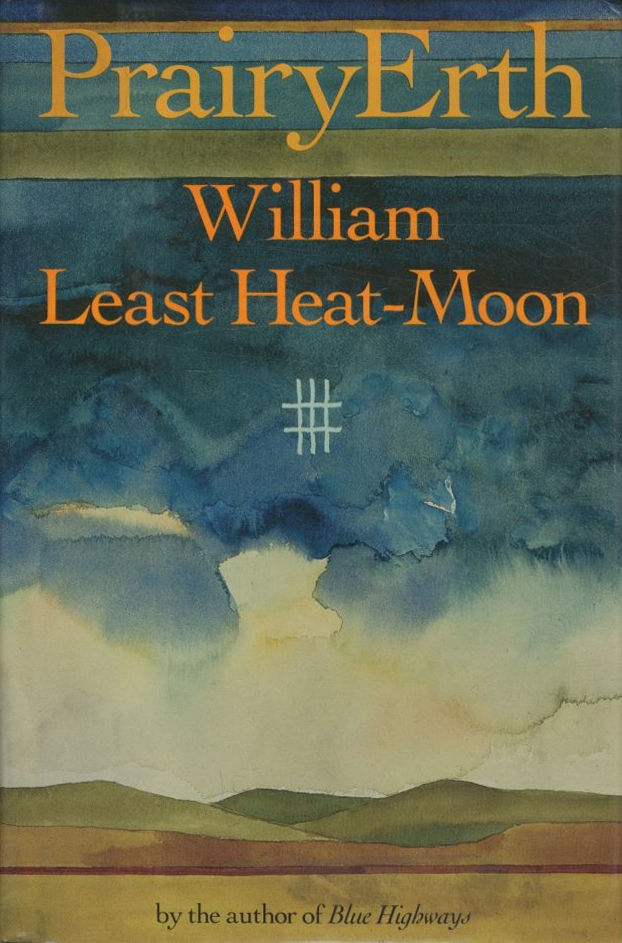
It’s been three weeks since I finished William Least Heat-Moon’s PrairyErth. In that time, I’ve tried to coalesce my thoughts into something resembling a review, ideally, but at this point, I’d settle for anything approaching simple coherence. Subtitled A Deep Map, this is a travelogue that goes nowhere (pejorative-sounding, I know) but rather stays—stays and plumbs, probes, digs, and unearths what is there to be found in Chase County, Kansas. With a population in the mid-to-late-1980s (when Heat-Moon spent his time there) of around 3,200 people (now numbering closer to 2,500), and measuring 778 square miles (that’s just over four persons per square mile), Chase County lies in the heart of the Flint Hills, home to two-thirds of all remaining tallgrass prairie in North America.
Where you fall on the All-In to No-Way spectrum, based on my admittedly, and intentionally, neutral description, may have something to do with your affinity for nature writing, but as likely as not has to do with your proximity to the Flint Hills and the degree to which living in or near them (or, I suppose, having spent time in them) is something akin to a spiritual experience. I tick all the boxes and, for me, this book has loomed large since I was first made aware of it during early visits to Manhattan, Kansas for work. I purchased a copy nearly two years before moving here, and then intentionally let it lie, intuitively knowing that there would be a time and place when I would be ready to receive it.
It’s now been four weeks since I finished PrairyErth. If I’ve struggled quite like this to put words to a book before, I can’t recall it. This feels different, as if I’m trying to review the Bible: Either you get it or you don’t, it moves you or it doesn’t, you believe or you don’t (for the record, when it comes to the Bible: I don’t). No words can capture what it gave you, and no words can adequately convey the totality of that to someone else. As Herman Hesse wrote in Siddhartha, “Knowledge can be communicated, but not wisdom. One can find it, live it, do wonders through it, but one cannot communicate and teach it.” That is how I feel trying to write about PrairyErth.
Both are spiritual journeys and, if you’ll pardon the tangent, it occurs to me that I read Siddhartha not long before reading Peter Singer’s Animal Liberation, the book that converted me to veganism 33 years ago. I realize now that the former opened the door to receiving the latter, just as moving to the Flint Hills and spending time with the land opened the door to writing poetry again, just as PrairyErth expresses and confirms and validates a deep truth I’ve come to believe about this place I call home: the land speaks to us, it nurtures and heals us, it mourns and celebrates with us, it cares for us and, in turn, expects to be cared for. It is a relationship based on equality and reciprocity, not domination and extraction.
Over the course of 600 pages, Heat-Moon chronicles the six years he spent in Chase County into a collage of geology, of geography, of people, of history—of place—not a linear journey but a sacred one. In the final chapter of the book, Heat-Moon and a friend, known as the Venerable, hike the southern Kaw Trail through Chase, the route the Kanza followed into their Indian Territory exile. Around the campfire one night, the Venerable asks, “Can you put all your walking here into a nutshell?” Heat-Moon replies, “Reduction is deception. Have you ever seen Hiroshige’s series of Japanese woodblock prints called One Hundred Views of Edo? I think I’ve been trying to accomplish what he did.” “But I want to know why you came out here.” “The question is, what drew me out here, and the answer to that is this book. Ninety-nine-point-nine to the ninth decimal of what has ever happened here isn’t in the book. Its two hundred thousand words are my nutshell.” “The old convenience of hiding behind the truth,” the Venerable wryly rejoined. “All right, then: sacred—sacred understanding comes not from bearing witness but from being a witness.” “I think you need both. In our own ways, we all do. The being requires the bearing.” I’ve spent the past three-and-a-half years coming to know this place through poetry. Like Heat-Moon and Chase County, like Hiroshige and Mount Fuji, those poems, and, if I’m lucky, those yet to come, are my nutshell: my ongoing pilgrimage to bear and to be, to learn, to know, and to understand, deeply, intimately—sacredly—this numinous place.


Comments